(this text can also be heard in the audio clip)
Rudolf Schild was born on November 7, 1873, in Frankfurt am Main, the son of a wealthy banking family. The Jewish family had an international outlook; his older brother was born in Florida, and all four of his siblings died before him. Little is known about his childhood, but he earned his high school diploma and studied medicine in Munich, where he received his doctorate magna cum laude in 1897.
From 1898 to 1901, Schild worked as an assistant at the Municipal Hospital in Frankfurt before moving to Berlin. In 1903, he headed an innovative clinic for internal medicine in Frankfurt that offered light baths, therapeutic air, and vibration massages—pioneering work in dietetics and physical medicine. Beginning in 1905, they were the first doctors in Frankfurt to treat patients with radium; Schild gave lectures on X-ray therapy for cancer and leukemia and was a member of the German X-Ray Society.
In 1910, Rudolf Schild moved to Berlin, where he initially worked as an internist on Aschaffenburger Straße. In 1915, he served as a staff physician in Spandau, and beginning in 1917, he ran his own practice at 11 Nachodstraße in Wilmersdorf, where he also lived. By this time, he identified as Protestant.
We can assume that Rudolf Schild lived his homosexuality openly and confidently. In Berlin, he joined the Scientific-Humanitarian Committee (WhK), the world’s first organization for gay rights, which campaigned for the abolition of Paragraph 175. In 1920, he became its chairman; in this role, Schild addressed an issue that continues to have repercussions to this day: the supposed “cure” for homosexuality. In 1921, he gave a lecture in Berlin with the provocative title “Are Homosexuals Suited for Marriage?” Schild warned against the idea that marriage to a woman could cure same-sex attractions, thereby opposing the self-help authors and doctors of his time who recommended marriage as “therapy.” The fact that his text was reprinted in a magazine as late as 1951 shows just how far ahead of his time his thinking was.
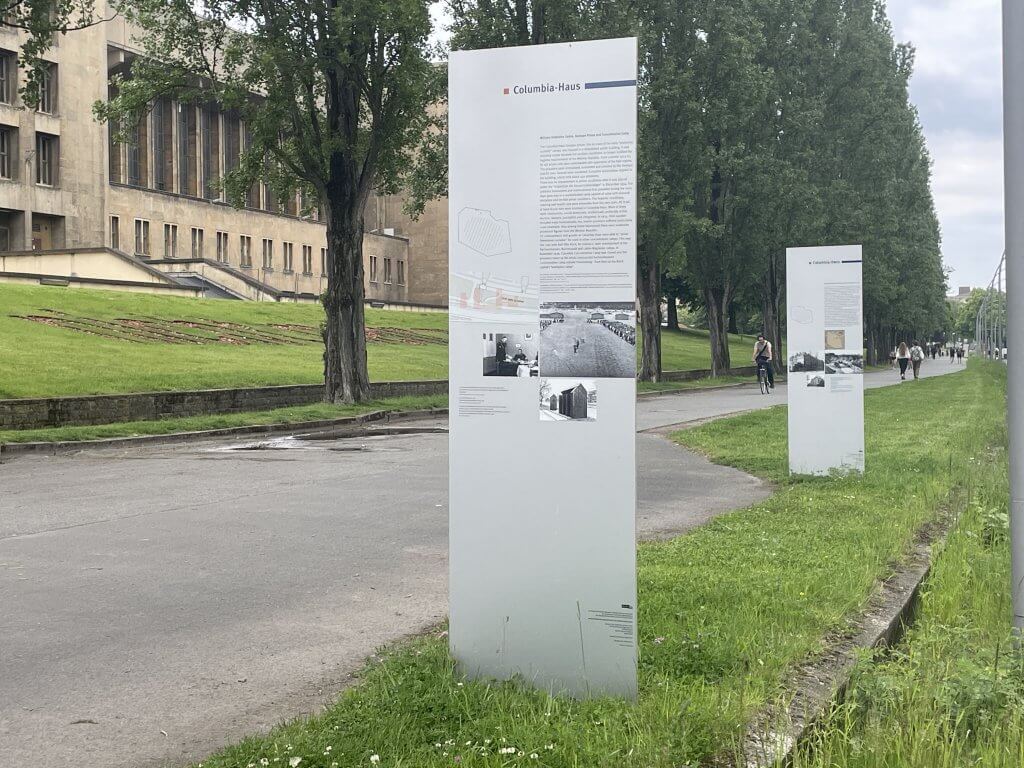
After the Nazis tightened §175 in 1935, this would soon have consequences for Rudolf Schild. Around 1935, he was named as a sexual partner by accused “male prostitutes” during several police interrogations in Berlin, which led to his arrest on January 7, 1936. Shortly thereafter, he was transferred to the Columbia-Haus concentration camp. It was one of the first concentration camps, located in the heart of Berlin on the edge of Tempelhofer Feld. We know nothing specific about what Rudolf Schild had to endure there, but based on the treatment of other prisoners, we can assume the worst—so bad, in fact, that Rudolf Schild did not want to leave the final word and the final decision about his fate to the Nazis. On the evening of January 25, 1936, Rudolf Schild was found dead in his cell. He took his own life by cyanide poisoning to escape Nazi tyranny and died as a self-determined gay man.
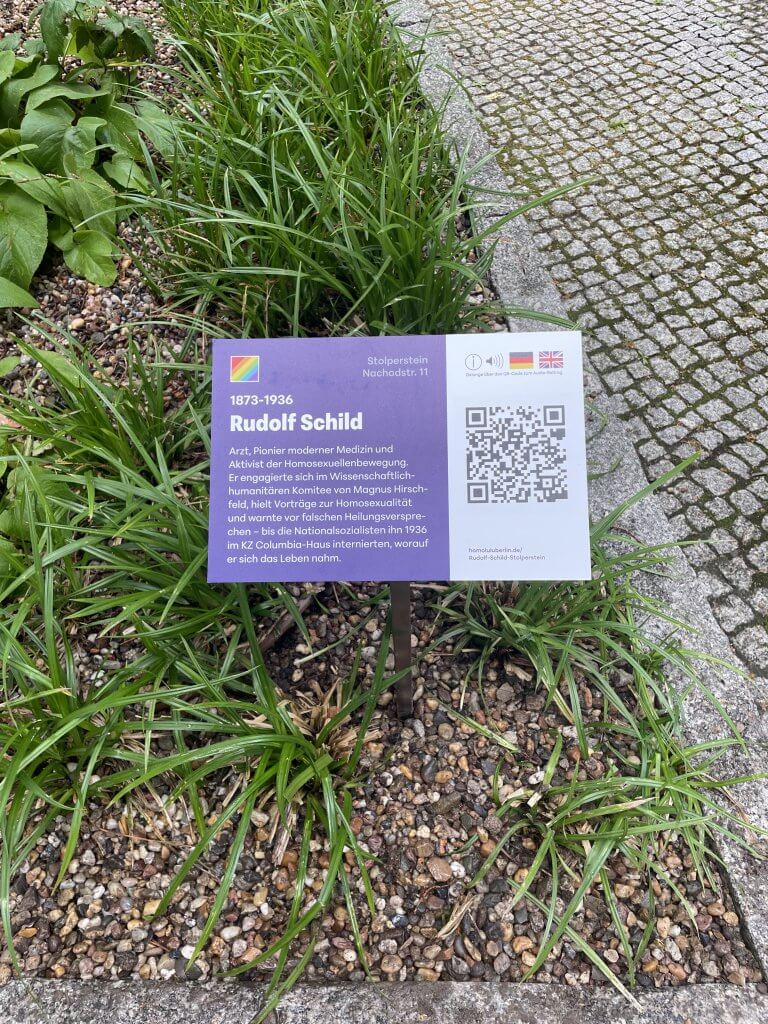
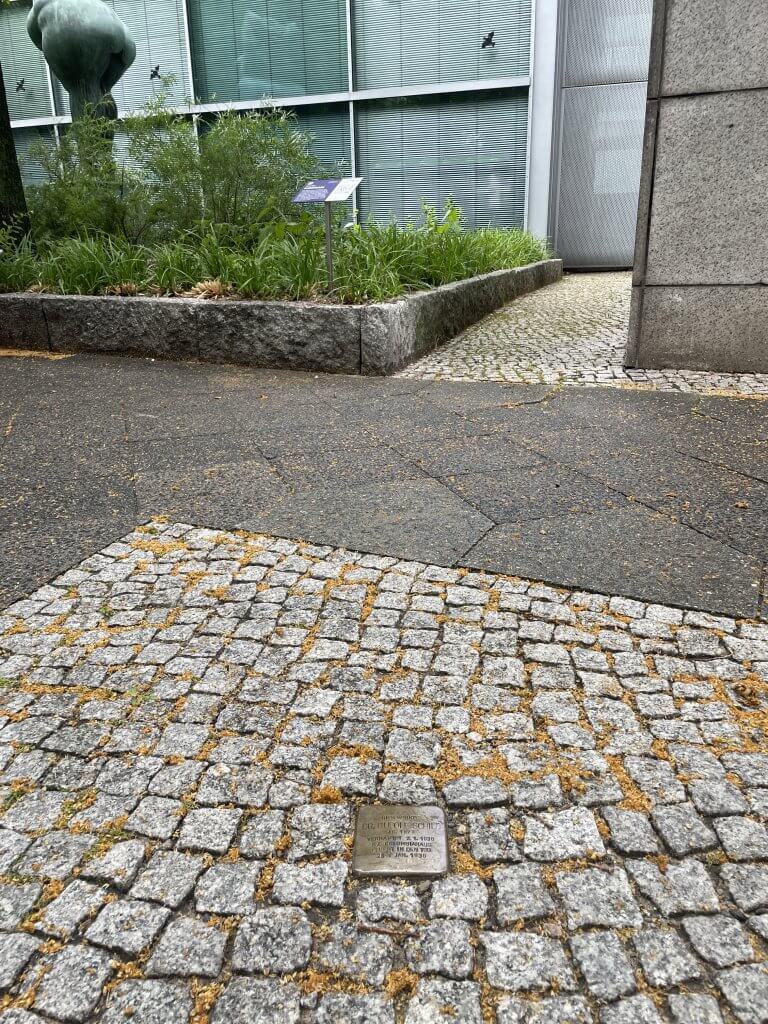
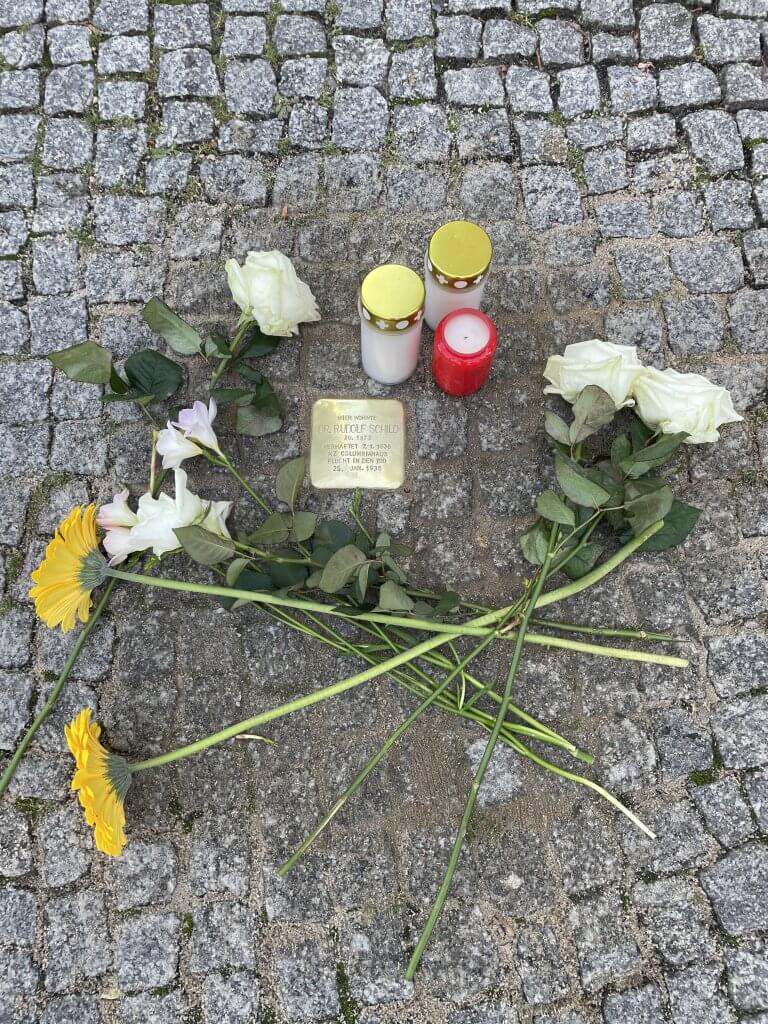
His Stumble Stone at Nachodstraße 11 was laid in 2025 with the cooperation of the Magnus Hirschfeld Society and commemorates his life. To this day, no photograph of him exists—which makes our commemoration of his life all the more important.
This article is based on a text by Raimund Wolfert written for the laying of the Stumble Stone in October 2025.