(this text can also be heard in the audio clip)
Klaus Nomi was born Klaus Sperber in 1944 in Immenstadt, Bavaria. He initially trained as a pastry chef, but he was equally drawn to the stage. He worked as an extra at the theatres in Essen before moving to West Berlin in the mid-1960s to further his vocal training.
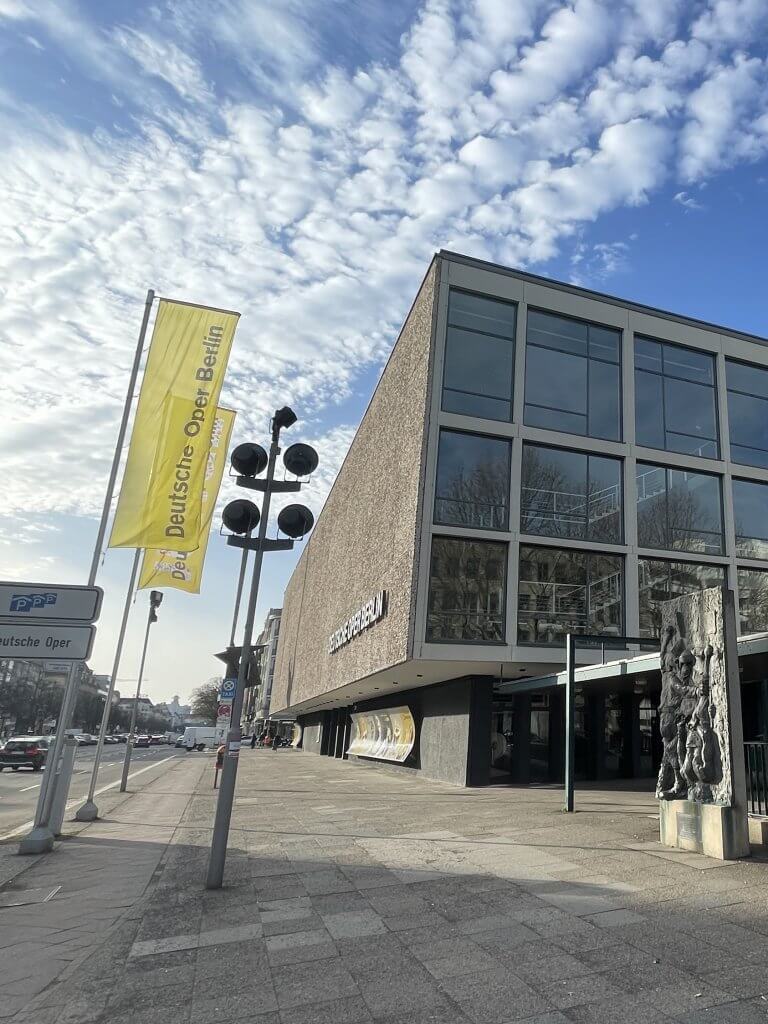
In Berlin, he began studying singing at the University of Music and Performing Arts. There, he was trained as a tenor, although he aspired to a career as a countertenor. At the time, this unusual vocal range was barely recognised by opera houses. To support himself, he worked as an usher at the Deutsche Oper Berlin. After performances, or late at night, he would sing on the empty stage for members of the front-of-house and technical staff.
At the same time, Klaus Sperber found a welcoming audience in West Berlin’s gay scene of the 1960s, where he could explore his passion for opera and gender-nonconforming performance. He regularly appeared at the Kleist-Casino under the stage name “Renata Castrata”, captivating audiences with highly dramatic operatic singing. It was here that he began experimenting with the elements that would later define his famous stage persona: androgyny, an extraordinary vocal range, and a deliberately artificial, almost extraterrestrial presence.
The Kleist-Casino, where Klaus Nomi performed, first opened in 1921. As its successor, Bull can therefore be considered the world’s second-oldest gay bar still in operation. Only Centralhjørnet in Copenhagen is older, having opened four years earlier. The original Kleist-Casino was located across the street, at Kleiststraße 15. In March 1933, the Nazis shut it down. However, following the intervention of Ernst Röhm, the homosexual leader of the Nazi SA, it was temporarily allowed to reopen before finally closing in 1935 or 1936. The building was destroyed during the war. On 4 February 1950, the Kleist-Casino reopened here at Kleiststraße 35. In 2002, the Kleist-Casino closed, and Bull, a gay fetish bar, took its place.
Despite his studies and practical experience, Nomi’s attempts to establish himself in the conventional opera world were unsuccessful. Opera houses offered him few opportunities, and there was little demand for countertenors, unlike today, when they are particularly sought after in Baroque opera. In 1973, Sperber therefore decided to emigrate to New York City.
There, he initially supported himself through various odd jobs, working as a pastry chef and even supplying the Guggenheim Museum with Linzer tortes. For a time, he shared an apartment with German filmmaker Rosa von Praunheim. He continued his vocal training, now determined to perform as a countertenor. He abandoned his birth name and adopted “Klaus Nomi” as his stage name – a play on the name of the science-fiction magazine *Omni*. This helped him establish his image as an otherworldly figure in New York’s queer underground scene.
By the late 1970s, Nomi had become a fixture of the East Village scene. His breakthrough came in 1978 at the performance series “New Wave Vaudeville”. Club performances followed, and in 1979 he appeared alongside David Bowie on “Saturday Night Live”, bringing him international attention. Before the performance, Bowie reportedly told him: “People are going to freak out when they see this – and your careers are going to take off.”
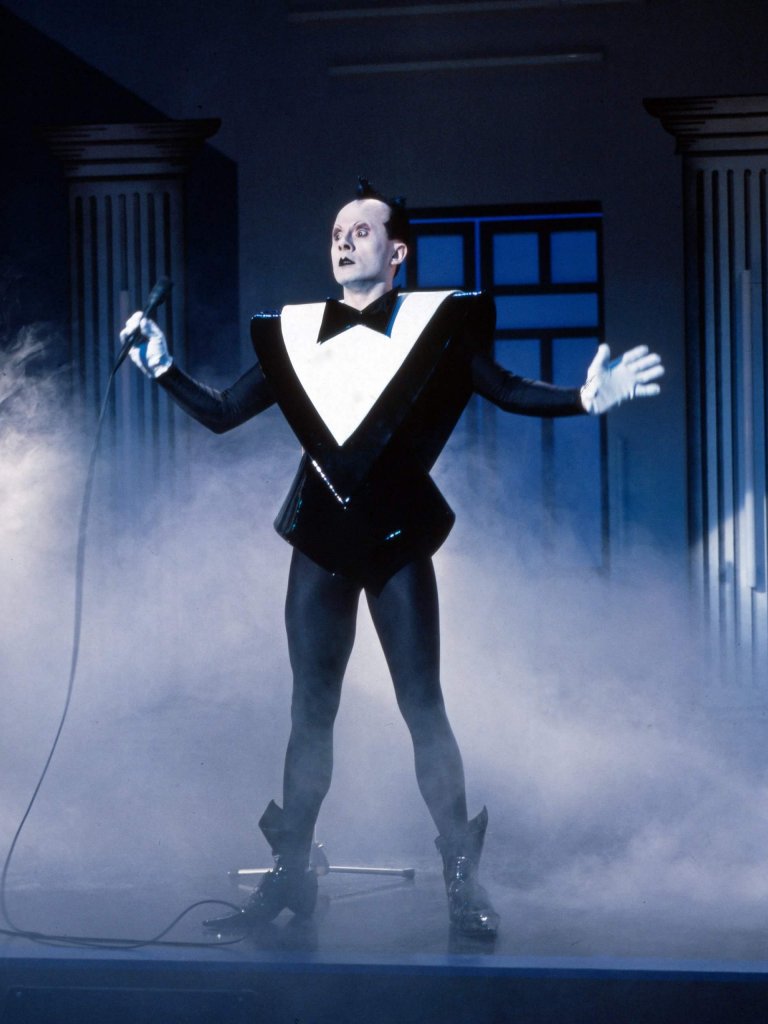
Nomi’s combination of synthesizer sounds, operatic arias, and pop covers, performed in a geometric black-and-white plastic tuxedo with his face painted white, became an icon of queer pop culture. His friend and artistic collaborator Joey Arias recalled: “The place went absolutely wild. It was incredibly pop, but also surreal, strange, beautiful – and quintessentially Downtown New York.”
Klaus Nomi released two albums before AIDS robbed him of the chance to continue his success and enjoy it for longer. He was at the beginning of a promising career that he would never be able to pursue further.
The first signs of his illness appeared in 1982. At the time, an AIDS diagnosis was effectively a death sentence – and would remain so for more than a decade. Nomi spent his final weeks in profound loneliness. Many people around him were afraid of contracting the mysterious new illness, then referred to as “gay cancer”, and avoided contact with him. He died on 6 August 1983, becoming one of the first well-known artists to die from AIDS-related complications. His ashes were scattered over New York.
Klaus Nomi left a lasting influence on art and popular culture. Lady Gaga described how she had been “fascinated” by Nomi and the eccentric Australian artist Leigh Bowery during her youth: “I grew up with them and naturally became the artist I am today.” Kylie Minogue also paid tribute to Nomi at the Glastonbury Festival in 2019 with a dancer dressed to resemble him. Fashion designers such as Marc Jacobs and Jean Paul Gaultier have also drawn inspiration from his distinctive aesthetic.
Since October 2026, a commemorative plaque with a QR code at Bull in Berlin, the site of the former Kleist-Casino, has honoured the life and artistic legacy of Klaus Nomi.